Protect Our Earth from Waste
Most Read Stories Today
-
Water Scarcity and Artificial Rainfall: The Positive and The Negative Effects of Cloud Seeding, including Health Hazards and Climate Implications.
-
Renewable Energy in Rural Areas: Challenges, Opportunities, and Successful Rural Projects
-
Pakistan's Agriculture at Risk Due to Climate Variability
-
South Korea's floods: root causes and prevention strategies.
-
South Africa's Recent Floods: Is Climate Change to Blame?
-
South Africa: Cape Town, A City Under Fire
-
The Human Cost of Climate Disasters
-
Our Oceans, Our Future: The South African Dilemma of Overfishing
-
Degenerative Impact of Hydrocarbons On The Environment.
-
Successes and Failures of Paris Agreement
Indonesia is the main contributor of plastic emissions to the environment, namely 3.4 million tons/year after India and Nigeria (Cottom et al., 2024). This is due to the large amount of waste entering the environment.
Each year, Indonesia produces approximately 42 million tons of municipal waste, including household, commercial, and institutional waste, such as food scraps, packaging, paper, furniture, clothing, and batteries. Furthermore, 7.8 million tons are produced annually from plastic (Kelly et al., 2025).
According to the Directorate of Waste Management at the Ministry of Environment and Forestry of The Republic of Indonesia, only 38.63% of waste is managed, with the remainder unmanaged. The main causes of plastic waste are overpopulation, inadequate waste management infrastructure, limited environmental management budgets, and a lack of public awareness.
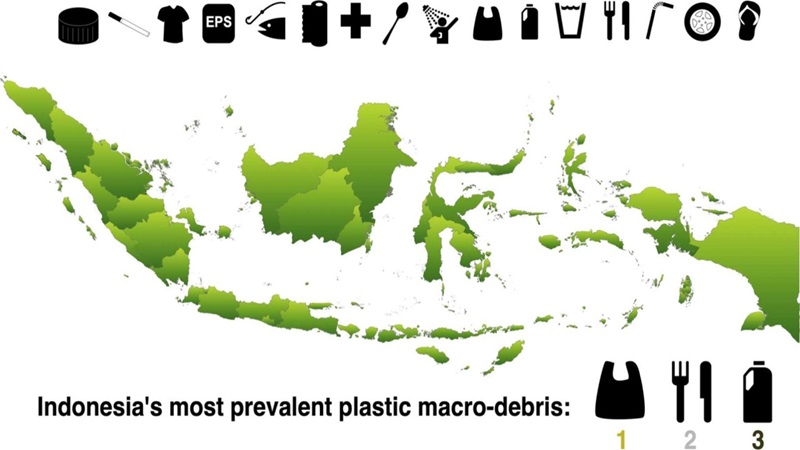
Waste is scattered from the highest to the lowest points: beaches, rivers, mangroves, the seabed, coral reefs, the sea surface, and inland areas. Collectively, Indonesia's rivers contribute approximately 42,000 tons of waste to the sea (Mai et al., 2023), which eventually flows into the ocean. Across all these areas, the most common waste is plastic bags, plastic food packaging, and plastic bottles (Kelly et al., 2025).
The above data is a significant number. So many pollutants are entering our environment, polluting us. So what should we do? The author was a volunteer participating in World Clean Up Day. World Clean Up Day is an annual global social action that encourages people worldwide to participate in cleaning and maintaining the cleanliness of the earth, aiming to reduce the problem of solid waste and marine debris. The activity took place on September 21, 2025, at the Bendungan Hilir Flyover, Jakarta. The total waste collected during the plogging day was 261.9 kg, comprising 185.85 kg of residue, 69.4 kg of inorganic waste, and 7.65 kg of cigarette butts. The activity also included a workshop on waste management, including daily clean-ups, waste reduction, consumer waste management, and the creation of Adiwiyata schools.
These steps are expected to reduce the amount of waste entering the environment, starting with ourselves and then having a significant impact on the environment. Let's start with ourselves to reduce the amount of waste, and start with ourselves to manage our waste so that we can be part of environmental change for the better.
Source:
- Cottom, J. W., Cook, E., Velis, C. A. 2024. A local-to-global Emissions Inventory of Macroplastic Pollution. Nature. 633, 101-108.
- Kelly, M. R., Cordova, M. R., Thompson, S, J. 2025. Meta-Analysis of The Spatial Distribution and Composition of Plastic Macro-Debris in Indonesia. Regional Studies in Marine Science. 90, 1-21.
- Mai, L., Sun, X., Zeng, E. Y. 2023. Country-Specific Riverine Contributions to Marine Plastic Pollution Author Links Open Overlay Panel. Science of The Total Environment. 874.
- Ministry of Environment and Forestry of The Republic of Indonesia, 2025. Ministry of Environment and Forestry of The Republic of Indonesia, 2025. Waste Management Performance Achievements.
Terms & Conditions
Subscribe
Report
My comments